How to Sell Your Car Online, Step by Step
Here’s how to sell your car online, step by step, from choosing who buys it to the paperwork once it’s gone. Each step says what to have ready and what to watch for.
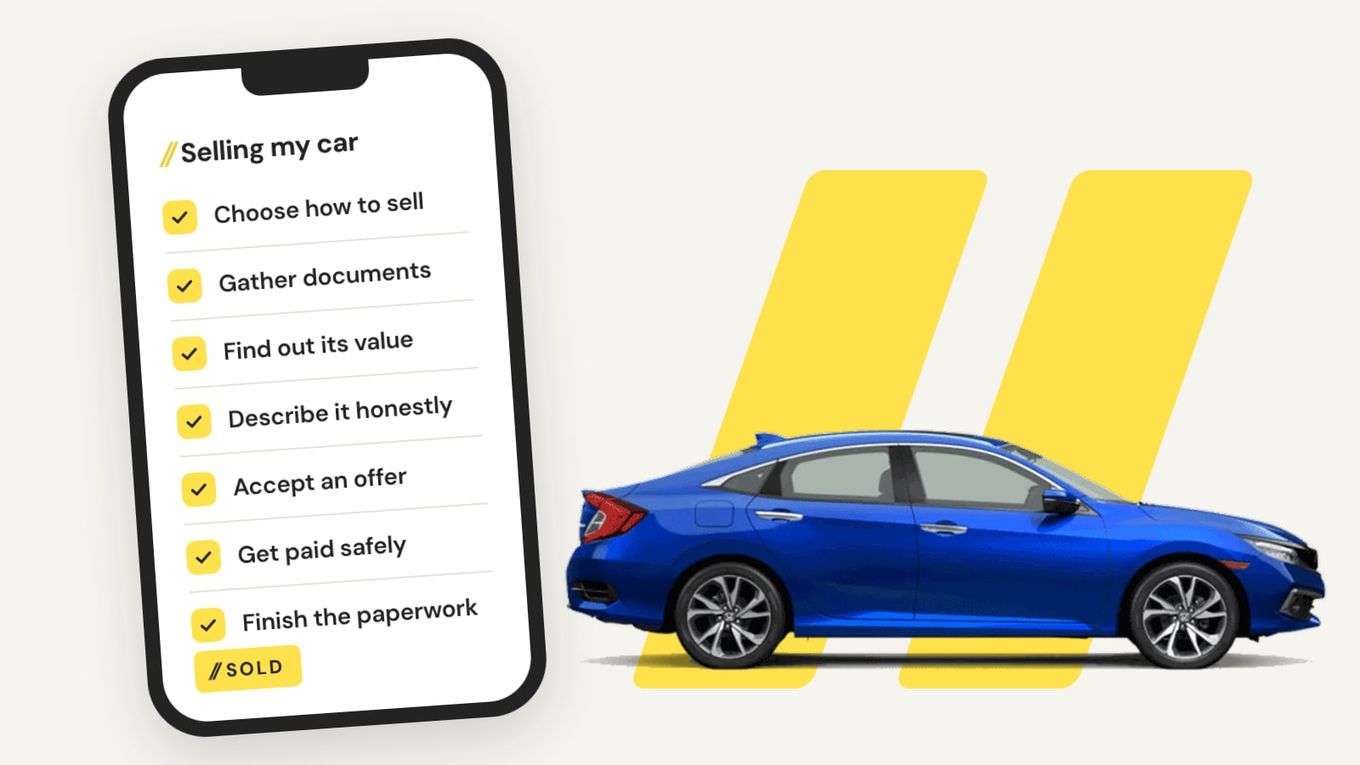
To sell your car online, decide whether an online car buyer or a private buyer gets it, gather the title and your ID, and get two or three offers to learn what it’s worth. Describe it honestly with photos, accept the offer that works, and sign the title over only once you’re paid. Then tell your state it’s sold and cancel your insurance. With an online car buyer, the offer usually comes back in minutes and the buyer comes to you. A private sale can bring more money, but it takes longer and the safety checks are yours to do.
How to sell a car online safely: the steps at a glance
- Choose how to sell it. An online car buyer for speed and simplicity, or a private listing if you have the time.
- Gather your documents. The title in your name, a photo ID, the VIN and, if you still owe money, the loan payoff amount.
- Find out what it’s worth. Get two or three offers. They’re free and take minutes.
- Describe it honestly, with photos. The offer you keep depends on it.
- Compare the offers and accept one. Check who buys the car, how you’re paid and when.
- Hand it over and get paid. Clear your data first, and sign the title only once the money is real.
- Finish the paperwork. Tell the DMV it’s sold, deal with the plates, then cancel your insurance.
Step 1: Choose how you’ll sell it
Selling a car online means one of two things: an online car buyer buys it from you, or you list it online and sell it to a person.
| Online car buyer | Private sale, listed online | |
|---|---|---|
| How it works | You describe the car online and get an offer. The buyer picks it up, or you drop it off | You post an ad on a marketplace and sell it to whoever answers |
| How fast | An offer in minutes, and done at the handoff | Days to weeks |
| What you get | An offer, usually good for about a week | Whatever a buyer agrees to pay, often more |
| What it asks of you | A short form, photos and one handoff | Photos, an ad, messages, test drives and checking the payment |
| The paperwork | The buyer usually walks you through it | Yours to get right |
Consumer Reports calls getting an offer from an online buyer “often the easiest overall selling experience.” In its survey of more than 14,000 members who sold a car within two years, those sellers reported the highest satisfaction. Online car buyers, Sell My Car Online among them, work this way: you never list the car, meet strangers or arrange test drives.
A private sale suits a car that’s in demand, if you’d rather do the work for a higher price. If you’re not sure, get an online offer first. It costs nothing and gives a private sale a number to beat. For trade-ins, auctions and donating, see every way to sell your car.
Step 2: Gather your documents
Whoever buys the car, you’ll need:
- The title, in your name. It proves the car is yours to sell. If you’ve lost it, get a duplicate from your state’s DMV before you sell, because a replacement can take time to arrive.
- A government-issued photo ID, so the buyer can match you to the name on the title. Consumer Reports notes that when you accept an online offer, “you’ll have to show proof of ownership and some form of identification.”
- The VIN, the vehicle identification number. It’s on the driver’s side of the dashboard, on a sticker in the door jamb, and on your title and insurance card.
- The loan payoff amount, if you still owe money. The lender has a claim on the car until the loan is paid in full and the lien is released. Ask your lender for the exact payoff figure, which can differ from the balance on your statement. Some buyers pay the lender out of the sale; others, us included, need the lien released first.
- Every key and remote. Online forms ask how many keys you have.
- The mileage, and your service records if you have them.
The full checklist covers the rest: two owners on the title, a smog certificate in California, and what to do if the title isn’t in your name.
Step 3: Find out what it’s worth
The quickest way to learn what your car is worth is to ask the people who’d buy it. “It’s really important to get multiple quotes when you’re selling a car this way,” Consumer Reports says, because the price depends on “the car’s age, its condition, and what’s in demand where you live.” Offers are free and most come back within minutes, so two or three give you a real range.
Online price guides are useful for a ballpark, especially before a private sale, but a guide’s number isn’t a promise to buy. An offer is.
What moves the number most:
- Mileage. Prices step down at round numbers on the odometer, so 79,900 miles reads better than 80,100.
- Condition. Dents, rust, warning lights and mechanical problems all count.
- The title’s history. A salvage or rebuilt title lowers what most buyers pay.
- Where you are and when you sell. Used-car prices usually rise the most in March and fall the most in October. See the best time to sell a car.
Step 4: Describe it honestly, with photos
An online offer is built from what you tell the buyer, then checked at the handoff. Expect the form to ask for the VIN or license plate, the mileage, the color and options, any accident history and other damage, whether anyone smoked in it, and how many keys you have.
Describe the car as it really is. If it turns out to be materially different from your description, with damage you didn’t mention, different mileage or a title problem, the buyer can lower or withdraw the offer at the handoff. The surest way to keep the number you were offered is to put the flaws in from the start.
There’s no need to detail it first. “A quick wash and vacuum will do,” Consumer Reports says, because professional buyers “are looking for damage, not a sparkling paint job.”
Photos that help, whether the buyer is a company or a person:
- each side of the car, and the front and back, in daylight;
- the front and back seats;
- the dashboard with the key on, so the mileage and any warning lights show;
- the tires;
- close-ups of any damage or rust.
Selling privately? The same honesty goes in your ad, along with the price, the mileage and the title status. See free car advertising websites for where to list it and what each site costs.
Step 5: Compare the offers and accept one
Online offers usually last a few days to a week, and some also expire after a set number of miles. Before you accept one, ask:
- Who actually buys the car? Some sites buy it themselves. Others pass you to a dealer, which then handles the payment.
- Pickup or drop-off? And does pickup cost anything?
- How, and when, am I paid? Cash, a check or a bank transfer, at the handoff or later.
- What could change the offer at the handoff? And can I still say no then, without a fee?
- What happens if I still owe money? Whether the buyer pays off the lender, or the lien has to be cleared first.
Pick the offer with the best number and terms you’re comfortable with, then schedule the handoff. Your state may ask for more paperwork than the title, so ask the buyer what to bring.
If you’re selling privately, this is where the messages start. Talk to a buyer by phone before you meet, meet somewhere busy in daylight, go along on the test drive, and keep the title and keys until you’ve been paid.
Step 6: Hand it over and get paid
Clear your personal data first. The FTC points out that your car “is a computer that stores a lot of information about you.” Delete the phone contacts and app log-ins it synced, the addresses in the navigation system, and the garage door codes. A factory reset may not end subscriptions like satellite radio or a Wi-Fi hotspot, so cancel or transfer those too, and disconnect the manufacturer’s app from the car. Then take out your toll tag, the garage remote and everything in the glove box and trunk.
Make sure the money is real before you sign anything. The FTC warns of a fake check scam aimed at people selling cars online. A “buyer” who isn’t local sends a check for more than the price, says it was an accident and asks you to send the difference back. Its rule: never send money to anyone who says they overpaid you by check. Your bank has to make the funds available quickly, but it can take weeks to find out a check was fake, and then the bank takes the money back and you repay what you sent. For an online sale to a person, the FTC suggests an escrow or online payment service.
With an online car buyer, you’ll know the payment method before the handoff. Ask again if anything about it is unclear.
Sign the title over only once you’re paid. Fill in the buyer’s name and address, the sale price, the date and the odometer reading in your state’s section of the title. Write carefully: in states like New York, a title with cross-outs or corrections isn’t accepted, and you’d need a duplicate. A written mileage disclosure is required for cars from model year 2011 on that are up to 20 model years old. Write a bill of sale too, and keep a copy. Some states require one, such as New York’s form MV-912, and it’s a good record anywhere.
Step 7: Finish the paperwork
Selling the car doesn’t end your responsibility for it until your state knows it’s sold.
| State | What the seller files | Why it matters |
|---|---|---|
| California | A Notice of Transfer and Release of Liability, within 5 calendar days | Tickets and claims from after the sale become the buyer’s |
| Texas | A Vehicle Transfer Notification, within 30 days | You “cannot be held responsible” for the buyer’s parking tickets and tolls |
| Florida | A Notice of Sale, form HSMV 82050 | It removes your registration from the vehicle and helps you avoid civil liability |
| New York | No release form. You turn in the plates with form PD-7, or move them to another car you own | You get a receipt, and the plates have to be dealt with before you cancel insurance |
Other states have their own version. Search your DMV’s site for “release of liability” or “notice of sale.”
Plates depend on the state. In Florida they stay with you, not the car. In Texas you can take them off. In New York they come off and go back to the DMV unless you move them to another car you own. In California, plates generally stay with the car.
Cancel your insurance last, after the sale is recorded and the plates are dealt with. In New York, canceling before you turn in the plates can get your registration suspended.
For every New York step and form, see how to sell a car in New York.
How it works with Sell My Car Online
We’re one of the online car buyers from step 1. Here’s how the steps go with us:
- Your offer. Tell us about your car online. The offer is free, usually ready in minutes, and good for 7 days or 300 miles, with no obligation.
- What we need. A title in your name with no loans or liens on it, a photo ID, the VIN and a few photos.
- The handoff. We pick the car up from wherever it’s parked, for free. In Buffalo and Rochester, pickup is usually the same day or the next.
- Getting paid. We pay you at pickup, in cash or another method we confirm when we schedule it, once the title is signed.
- If something’s different. If the car isn’t as described, we may revise the offer before anything is signed, and you can still say no.
We buy cars that don’t run too, and wrecked cars and salvage titles. See cash for cars. Or get a free offer now.
Questions people ask
How long does it take to sell a car online?
With an online car buyer, the offer usually comes back in minutes, and the sale is done at pickup or drop-off, often within days. A private sale can take days or weeks, depending on how quickly a serious buyer answers your ad.
Can I sell my car online if I still owe money on it?
Usually, yes. Many online buyers pay off your lender out of the sale and pay you the rest. Some, including Sell My Car Online, need the loan paid off and the lien released first. Either way, start by asking your lender for the payoff amount.
Can an online offer change after the inspection?
Yes, if the car isn’t what you described: undisclosed damage, different mileage, missing parts or a title problem. Describe it honestly and photograph the flaws, and the offer you see is much more likely to be the one you’re paid.
Do I need to clean my car before selling it online?
A wash and a vacuum are enough. Buyers look for damage, not shine. Do take everything personal out of it, and clear your data from its systems.
How do online car buyers pay you?
It varies by buyer: cash, a check or a bank transfer, at the handoff or a few days later. Ask before you accept, so there are no surprises at pickup.
Is it safe to sell a car online?
Selling to an established online buyer is the lower-risk route, because there are no strangers or test drives, and you know how you’ll be paid. In a private sale, the biggest risk is payment: never accept a check for more than the price, and never send money back to a buyer.
Can I sell a car online without a title?
Usually not, because the title is what proves the car is yours. Get a duplicate from your state’s DMV first.
Sources
Checked November 4, 2026.
- Consumer Reports: how to sell your car to an online dealer for the most money (updated October 18, 2026)
- Federal Trade Commission: fake check scam targets online car sellers (February 27, 2025), how to spot, avoid and report fake check scams and clear your personal data before selling your car
- California DMV: release of liability, license plates and new odometer disclosure requirements
- Texas DMV: buying or selling a vehicle and how to find the VIN
- Florida Department of Highway Safety and Motor Vehicles: selling a vehicle
- New York DMV: buy, sell or transfer vehicle ownership, certificate of title, surrender your plates and registration and insurance lapses
- Consumer Financial Protection Bureau: payoff amount vs. current balance
- Lacetera, Pope and Sydnor, Heuristic Thinking and Limited Attention in the Car Market, NBER Working Paper 17030 (2011)