Best Time to Sell a Car: What the Price Data Shows
The best time to sell a car is usually late winter into spring. Here’s what the price data shows, month by month, and when waiting costs more than it saves.
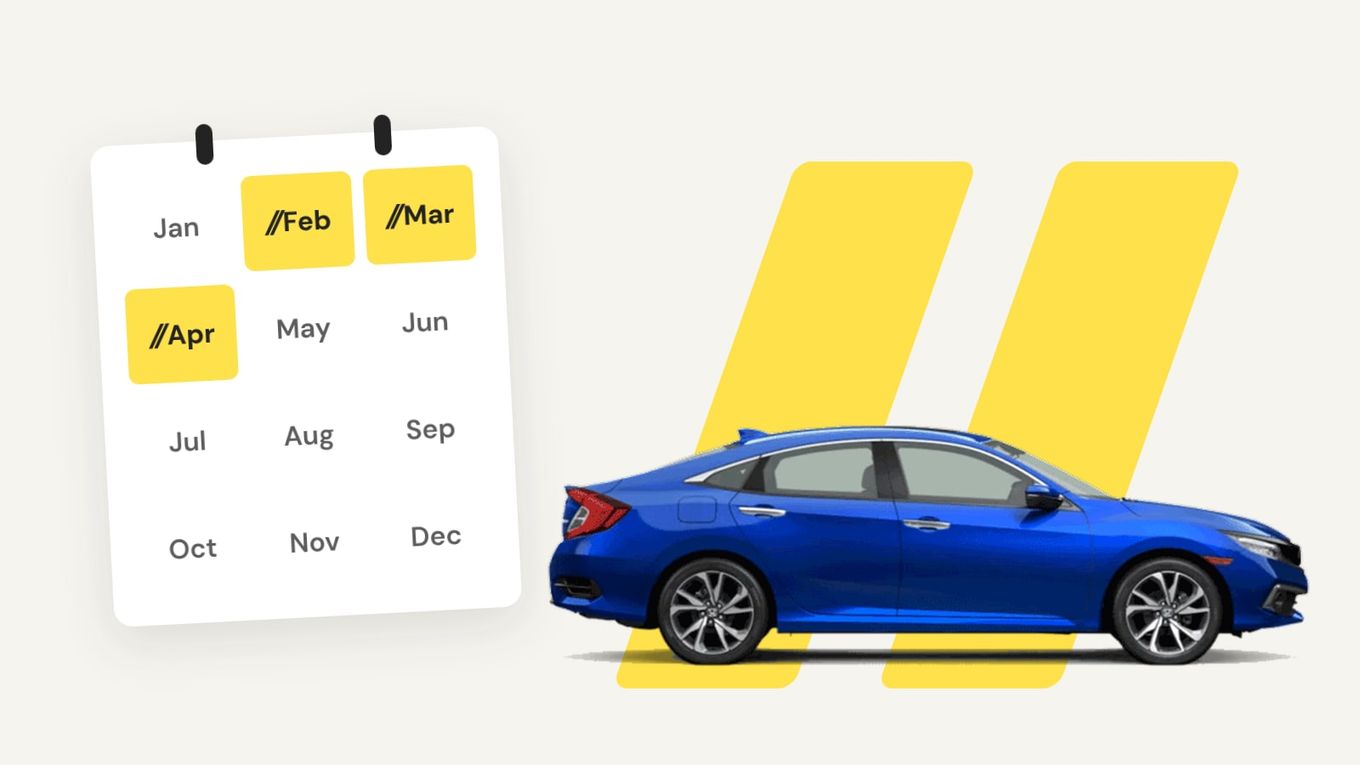
If you can choose, sell between February and April. That’s when tax refunds land and used-car prices usually rise the most, with the biggest jump in March. Prices ease only slightly through early summer, then fall the most in October. But the month matters less than you might think. Every month you wait, your car gets older and adds miles, and that costs money too.
Here’s what the data shows, and how to tell whether waiting is worth it.
How used-car prices move through the year
Cox Automotive tracks what dealers pay for used cars at auction in its Manheim Used Vehicle Value Index. Those are wholesale prices, not what a private buyer pays you, but they’re a good guide to which way the whole used-car market is moving.
Here’s the long-term average change in the index for each month, before seasonal adjustment:
| Month | Typical change in wholesale prices |
|---|---|
| January | Up 0.4% |
| February | Up 0.9% |
| March | Up 3.4% |
| April | Up 1.3% |
| May | Down 0.3% |
| June | Down 0.5% |
| July | Down 0.7% |
| August | Up 0.1% |
| September | Down 0.3% |
| October | Down 1.5% |
| November | Down 0.4% |
| December | Up 0.3% |
Put together, prices typically climb about 6% from January through April, drift down through the summer, and drop the most in October, which Cox says typically shows “the highest levels of depreciation in the year.”
Why spring is strongest
Tax refunds. The IRS opened the 2026 filing season on January 26, and by early May the average refund was $3,276, up 11.5% from a year earlier. Cox says higher-than-average refunds “helped activate pent-up demand” in early 2026, and wholesale prices peaked in March.
Dealer listings tell the same story from the other side. iSeeCars looked at more than 40 million used-car sales from 2024 through October 2025 and counted how often cars were listed at least 10% below market value. Discounts were most common in January, February and December, and least common in June, May and July. So in late spring and early summer, your car competes with the fewest marked-down cars. A separate iSeeCars analysis of used trucks found the same months, which cuts against the common advice to sell a truck as winter comes.
Waiting for spring isn’t free
Cars lose value as they age. iSeeCars found that five-year-old cars sold between March 2025 and February 2026 had lost 41.8% of their value on average, more than 8% a year. They lose value with miles, too (see the next section).
So weigh the two. If it’s January, the spring rise is a few weeks away and worth catching. If it’s October, waiting until March means five more months of age and miles, which can cancel out much of the spring rise.
Mileage: sell before the next 10,000
Buyers notice the first digits on the odometer. A study of more than 22 million wholesale used-car sales found prices drop at every 10,000-mile mark from 10,000 to 100,000 miles, by about $150 to $200 each time. Cars with 79,900 to 79,999 miles sold for about $210 more than cars with 80,000 to 80,100. The study is from 2011, so treat the dollar figures as a rough guide.
If your odometer is about to roll over to the next 10,000, sell before it does.
There’s no cliff at 100,000 miles, though. The same study found drops of about the same size at every 10,000-mile mark, so 100,000 costs you no more than 90,000 did.
A newer car may also have factory warranty left. New-car warranties last a set number of months or miles, whichever comes first, the FTC says, so the coverage ends on its own schedule. If yours still has some, check whether it transfers to the next owner, say so in your listing, and sell before it runs out.
The market right now
As of October 2026:
- Prices. The Manheim index was 207.4 in mid-October, 2.2% higher than a year earlier. Before seasonal adjustment, prices fell 2% in the first half of October: the usual fall slide. Cox says the firmer values “reflect leaner inventory rather than stronger buying,” and it expects the index to end 2026 up only about 0.2%.
- Gas prices. Regular gas averaged $4.28 a gallon nationally in the week of October 19, up $1.27 from a year earlier, and $6.03 in California. Cox says large pickups and SUVs “absorbed more of the fuel-cost impact, with demand and values declining,” while compact cars were up 5.6% from a year earlier. Electric car values were up 6.8%, though Cox says that momentum is fading as more of them come off lease.
- Interest rates. The average auto loan rate was 11.22% in September 2026, according to Cox Automotive’s Dealertrack data. Cox says September’s price drop was bigger than usual for the season, amid high fuel prices and higher interest rates.
In short: if you drive a full-size truck or SUV, high gas prices are working against you right now. If you drive something small and efficient, they’re working for you.
Timing the paperwork
Rules vary by state. Here’s how they work in California:
- Registration. If your renewal is coming up, try to sell before you pay it. California doesn’t refund registration fees paid before a sale; fees paid after the sale are refundable.
- Smog check. A private sale needs a smog check passed within the last 90 days, and the seller provides it. Cars less than four years old don’t need one; the buyer pays a smog transfer fee instead. Get the check when you’re ready to list, not months ahead.
- Release of liability. Tell the DMV within 5 calendar days of the sale. Once the DMV has it, parking tickets, traffic violations and civil claims from after the sale are the buyer’s responsibility, not yours.
- Insurance. Keep the car insured until it’s sold and the release of liability is filed.
Sell sooner if
- Your odometer is close to the next 10,000 miles.
- Your registration renewal is due soon.
- Your factory warranty is about to run out.
- You’ve already bought your next car and are paying to insure and register two.
Selling it yourself? Here are the free car advertising websites worth listing on, and what the paid ones cost. Not sure you want to? Compare the other ways to sell your car.
If you’d rather not list it at all
Our offers follow the same market, so we won’t tell you the month doesn’t matter. What we can tell you is what your car is worth today.
Get a free offer from Sell My Car Online. There’s no obligation, we pick the car up from your driveway for free, and we pay you at pickup. If the number works, you’re done. If not, you know what a private sale has to beat.
Questions people ask
What’s the best month to sell a car?
March, on average. In Cox Automotive’s long-term data, wholesale used-car prices rise 3.4% in a typical March, the biggest gain of any month, as tax refunds arrive. February and April are strong too.
What’s the worst month to sell a car?
October. Used-car prices usually fall the most that month, by 1.5% on average in Cox’s data.
Should I sell my car before it hits 100,000 miles?
Only because 100,000 is a 10,000-mile mark. Wholesale prices drop by roughly $150 to $200 at each one, and the drop at 100,000 is about the same size as the others. If you’re at 99,500 miles, sell before you pass it. Otherwise, 100,000 matters no more than 90,000 did.
Is it better to sell a car in winter or summer?
Late winter, heading into spring. Prices usually start climbing in January and rise the most from February through April. Summer is steady to slightly softer, and fall is the slowest.
Sources
Checked October 23, 2026.
- Cox Automotive, Manheim Used Vehicle Value Index, long-term average monthly moves from each month’s report: January, February, March, April, May, June, July, August, September, October, November and December
- Cox Automotive: first quarter 2026 review, third quarter 2026 review and mid-October 2026 update
- IRS: 2026 filing season opens and filing season statistics, week ending May 8, 2026
- iSeeCars: best and worst times to buy a used car, best time to buy a used truck and cars that hold their value
- Lacetera, Pope and Sydnor, Heuristic Thinking and Limited Attention in the Car Market, NBER Working Paper 17030 (2011)
- Cox Automotive: Dealertrack Credit Availability Index, September 2026
- Federal Trade Commission: auto warranties and service contracts
- U.S. Energy Information Administration: gasoline and diesel fuel update
- California DMV: smog inspections, release of liability and refunds; California Bureau of Automotive Repair: Smog Check